New Layout Striping
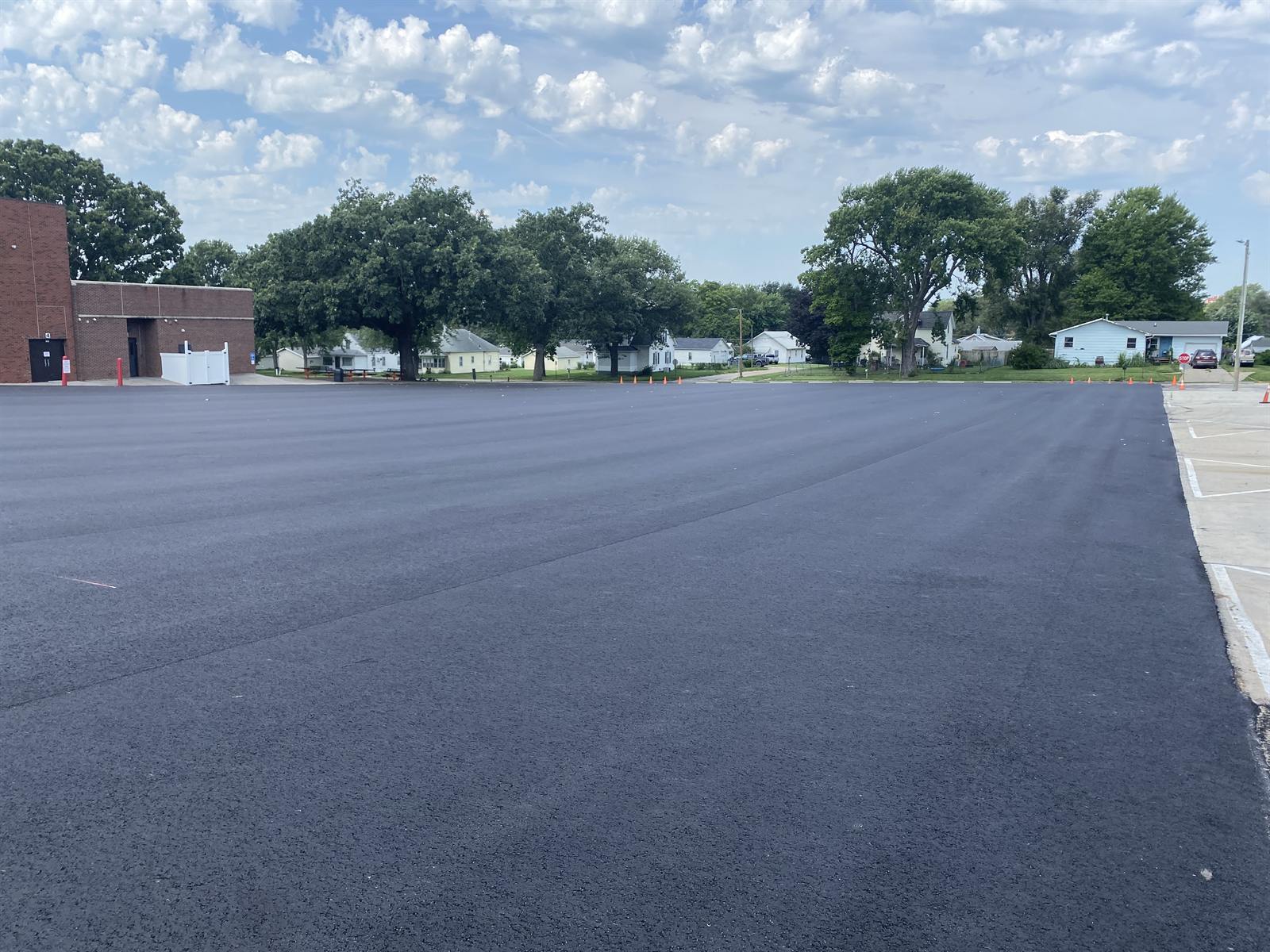
New asphalt is a blank canvas. Before a single line goes down, the layout has to be worked out — stall count, aisle widths, ADA placement, and traffic flow — so the lot performs for years, not just looks good on day one.
Designing the Lot Before Painting It
A new-layout job starts on paper, not on the asphalt. There's no existing paint to trace, so the whole plan has to be worked out and checked before any line gets struck.
- Measure and map the lot. We take field measurements of the paved area, entrances, drive aisles, and any fixed obstacles — light poles, curbs, drains — that the layout has to work around.
- Plan the layout. Stall angle (90-degree vs. angled parking), aisle width, and stall dimensions are worked out to fit the site — usually balancing maximum stall count against smooth two-way or one-way traffic flow.
- Place required markings. Accessible stalls and van-accessible aisles are sited per current ADA slope and proximity rules, and any fire lanes or code-required markings are located to satisfy local fire and building code from the start.
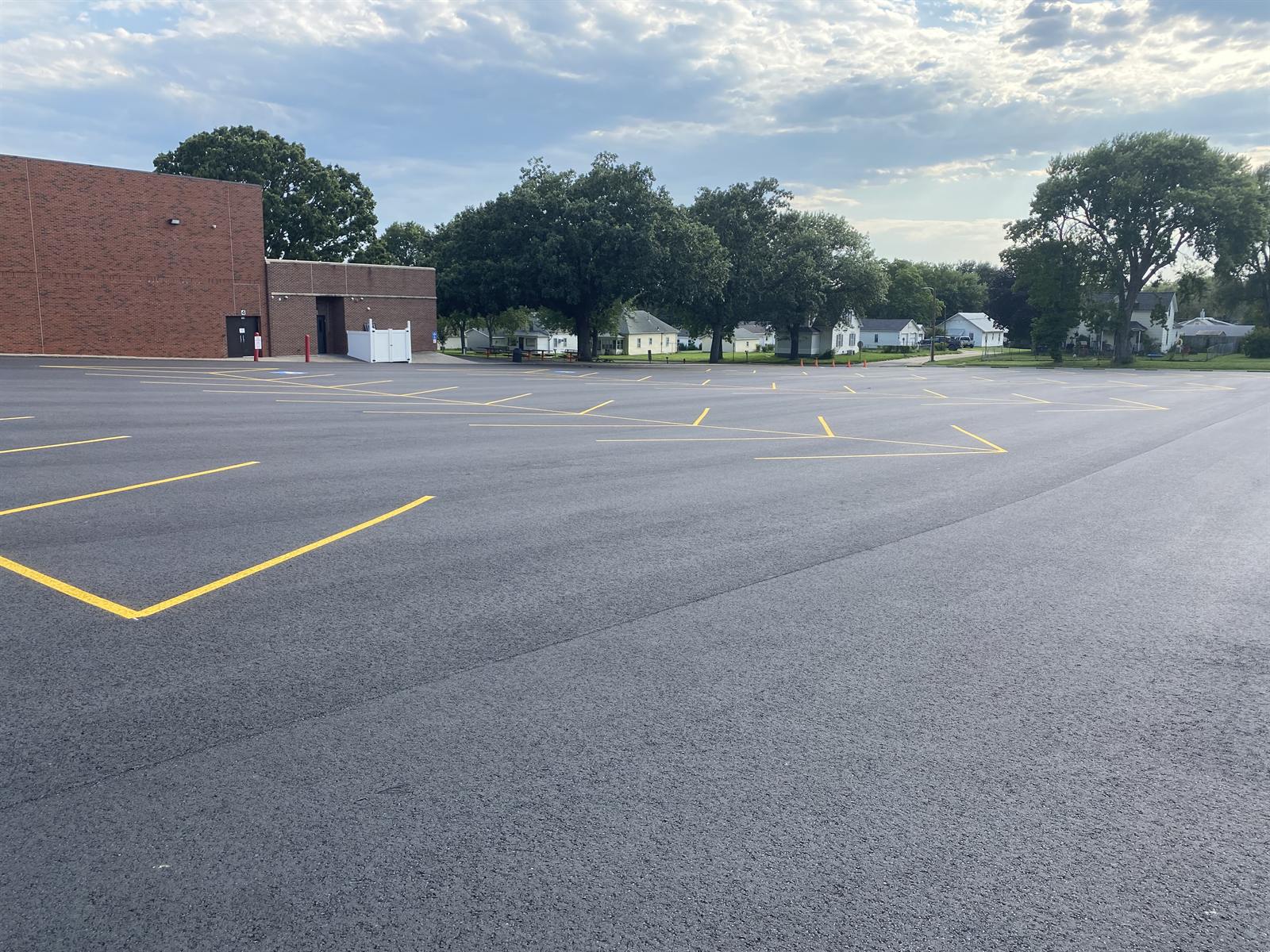
- Chalk the full layout. The entire plan is laid out in chalk or string lines across the lot so it can be walked and confirmed against the design before any paint is committed.
- Paint in sequence. New asphalt is more porous than an aged, sealed surface, so lines typically get a heavier or double-coat application, painted in a sequence that keeps part of the lot usable while the rest cures.
Why the Layout Itself Matters
On a re-stripe, the layout is already decided. On a new layout, every one of these gets decided for the first time — and a bad call here gets repainted into the lot for years.
Stall Count
Stall angle and aisle width directly trade off against how many usable spaces fit on the lot — a few inches of aisle width across a full layout can add or lose several stalls.
Traffic Flow
Entrance and exit placement, one-way vs. two-way aisles, and stall angle set how vehicles move through the lot for as long as the layout stands — bottlenecks designed in now get driven daily.
Code Compliance From Day One
Accessible stall counts and placement, van-accessible aisle width, and fire lane clearances are all easier and cheaper to get right in the plan than to fix after the paint has already dried.
Avoiding Rework
A layout mistake caught during the chalk walk-through is a five-minute fix. The same mistake caught after painting means grinding out lines and repainting the section.
Opening-Day Impression
For new construction or a grand reopening, the striping is often the first finished, human-scale detail customers actually notice on the property.
Long-Term Value
A well-planned layout is what every future re-stripe traces back to — get it right once, and every repaint after it is a straightforward restoration instead of a repeat redesign.
When a New Layout Makes Sense
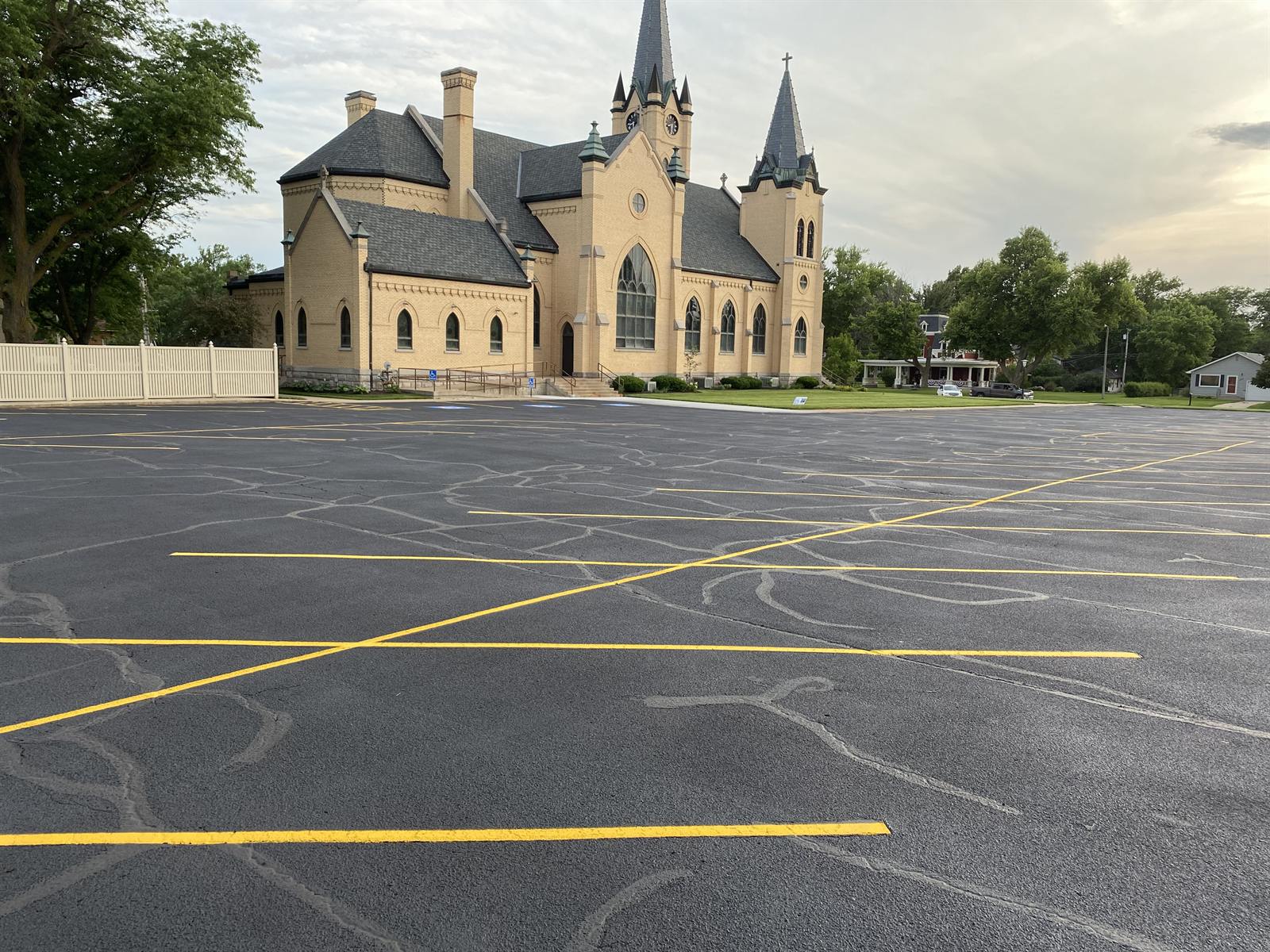
A new layout isn't just for brand-new construction. It's the right call whenever there's no working layout to restore, or the existing one no longer fits how the property is used:
Not the Same as a Re-Stripe
Layout design and line repainting solve different problems — knowing which one you need saves time on the site visit.
Choose a New Layout If:
You have bare or freshly resurfaced asphalt with no markings, or you want to redesign the flow to add stalls, fix a bottleneck, or bring an older layout up to current code.
Choose Re-Striping If:
Your current layout already works fine — the stalls and lanes just need to be repainted where the paint has faded. See Parking Lot Re-Striping.
Planning a New Layout? Let's Design It Right.
Free, no-obligation quote for new-asphalt striping or a full layout redesign.